Assessment Report

Personality Assessment & Testing Service

Test

  • Age22
  • Gender Male
  • Socio Economic Status Middle
  • Family System Joint with Extended Family
  • Marks in Last Class / Expected Marks in 70 %

Congratulations

We would like to take this opportunity to congratulate you on taking the first step in choosing a suitable career guidance for yourself and thank you for trusting us to make suitable career suggestions based on your interests and skills.We sincerely hope this report will help you in making an informed decision about your degree and future career.

The next tabs will present comprehensive results of your
personality, interests, and strong subject areas. Based on these three dimensional results, our AI model will present the three ideal career fields for you in Pakistan

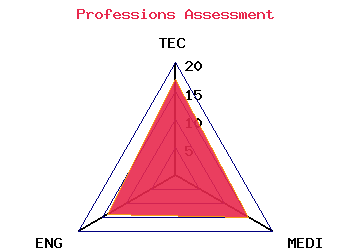
professions assessment

professions graph
1
TEC
Technical
2
MEDI
Medicine
3
ENG
Engineering
Personality Assessment & Testing Service

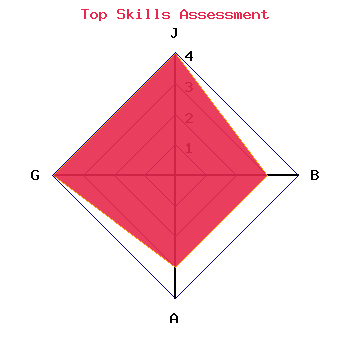
Your Skills Assessment

Here are the details regarding the top skills identified during assessment. Additional, please review your skills identified for improvement to enhance theme for better career progression.

skills graph

Top Skills

  • [J] Research and Analytical Skills
  • [G] Visual Communication
  • [A] Compassion and Empathy
  • [B] Critical Thinking and Problem-Solving

Skills To Improve

  • [E] Curiosity and Continuous Learning
  • [D] Technical and Analytical Thinking
  • [F] Creativity
  • [C] Teamwork and Collaboration
Personality Assessment & Testing Service

Descriptive Report

Please review your following descriptive report, which includes details regardong the skills required to progress in that specific profession, prospective fields relevant to that profession, and information on occupation information on occupation prospects and job operortunities

1. Technical

Required Skills:

[D] Technical and Analytical Thinking

[E] Curiosity and Continuous Learning

[F] Creativity

[G] Visual Communication

Fields:

[1] Construction

[2] Dying and Printing

[3] Cutting and Sewing

[4] Architecture

Occupations:

civil engineering, architecture, project management, quantity surveying, construction supervision, textile dyeing and printing technicians, colorists, quality control specialists, textile designers, production managers in textile mills, fashion designers, pattern makers, tailors, sewing machine operators, quality control inspectors, production supervisors in garment factories,

Job opportunities:

Job Opportunities: Construction: Pakistan: In Pakistan, the construction industry is rapidly growing, driven by infrastructure development and urbanization. Job opportunities include civil engineering, architecture, project management, quantity surveying, construction supervision, and skilled trades such as masonry, carpentry, and plumbing. Global: The global construction industry offers vast employment prospects, particularly in developing countries undergoing rapid urbanization. Opportunities exist in large-scale infrastructure projects, architectural firms, international construction companies, and specialized trades. Dyeing and Printing: Pakistan: Pakistan has a strong textile industry, making it an ideal place for careers in dyeing and printing. Job prospects include textile dyeing and printing technicians, colorists, quality control specialists, textile designers, and production managers in textile mills and garment manufacturing units. Global: The global textile and fashion industries offer diverse career opportunities in dyeing and printing. Employment options include working with textile manufacturers, fashion houses, interior design firms, printing companies, and textile technology research. Cutting and Sewing: Pakistan: Pakistan has a thriving textile and apparel industry, creating numerous job opportunities in cutting and sewing. Careers include fashion designers, pattern makers, tailors, sewing machine operators, quality control inspectors, and production supervisors in garment factories, fashion studios, and retail outlets. Global: The global fashion and textile industries provide job prospects for individuals skilled in cutting and sewing. Opportunities exist in fashion design houses, garment production units, textile mills, costume design, and custom tailoring. Architecture Entrepreneurship and Self-Employment: Architecture provides a platform for entrepreneurship and self-employment. Architects can establish their own architectural firms and work independently or as part of a team. This offers greater control over project selection, design philosophy, and professional growth. Collaborative and Interdisciplinary Work: Architecture involves collaboration with various professionals, including engineers, contractors, interior designers, and landscape architects. Architects often work in multidisciplinary teams, fostering creative synergy and professional networking. Technological Advancements: Architects benefit from technological advancements that streamline design processes, such as computer-aided design (CAD), Building Information Modeling (BIM), and visualization tools. These technologies enhance efficiency, accuracy, and communication within the architectural industry.  
Personality Assessment & Testing Service

2. Medicine

Required Skills:

[A] Compassion and Empathy

[C] Teamwork and Collaboration

[E] Curiosity and Continuous Learning

[J] Research and Analytical Skills

Fields:

[1] MBBS

[2] Pharmacy

[3] Allied Health Sciences (HND, MLT, MIT etc.)

[4] Nursing

[5] Public Health

[6] Veterinary

[7] Dental

Occupations:

Hospitals and Clinics, Academic Institutions, Public Health, Pharmaceutical Industry, Medical Technology, Healthcare Administration, Research and Development, Telemedicine, Occupational Health, Health Insurance, Military and Defense, Government Agencies, Medical Writing and Journalism, Medical Consultancies,

Job opportunities:

Hospitals and Clinics: Traditional clinical settings, including public and private hospitals, outpatient clinics, and specialized medical centers. Academic Institutions: Medical schools, universities, and research institutions where they can teach, conduct research, and mentor students. Public Health: Government health departments, non-governmental organizations (NGOs), and international health organizations working on public health initiatives and disease prevention. Pharmaceutical Industry: Pharmaceutical companies involved in drug research, development, manufacturing, and sales. Medical Technology: Companies developing and producing medical devices, diagnostics, and healthcare technologies. Healthcare Administration: Hospitals and healthcare organizations employ professionals in managerial and administrative roles. Research and Development: Research centers and laboratories focused on medical research and clinical trials. Telemedicine: Companies and platforms providing remote healthcare services and virtual consultations. Occupational Health: Corporations, businesses, and industries hire medical professionals to manage employee health and safety. Health Insurance: Insurance companies often employ medical graduates for roles involving claims assessment and medical review. Military and Defense: Armed forces and defense departments employ medical professionals to provide healthcare to military personnel. Government Agencies: Various government departments related to health and regulatory bodies often require medical expertise. Medical Writing and Journalism: Media outlets, medical publications, and online platforms hire medical writers and journalists to communicate healthcare information to the public. Medical Consultancies: Consulting firms specialized in healthcare and medical consulting.    
Personality Assessment & Testing Service

3. Engineering

Required Skills:

[B] Critical Thinking and Problem-Solving

[C] Teamwork and Collaboration

[D] Technical and Analytical Thinking

[E] Curiosity and Continuous Learning

Fields:

[1] Civil

[2] Automobile

[3] Aeronautics

[4] Robotics

[5] Telecom

Occupations:

Software Engineer/Developer (Industries: Information Technology, Software Development, E-commerce, Startups), Civil Engineer (Industries: Construction, Infrastructure Development, Real Estate, Government Agencies), Mechanical Engineer (Industries: Manufacturing, Automotive, Aerospace, Energy, Research and Development), Electrical Engineer (Industries: Power and Energy, Electronics, Telecommunications, Robotics, Automation), Chemical Engineer (Industries: Chemical Processing, Pharmaceutical, Petrochemical, Biotechnology), Aerospace Engineer (Industries: Aerospace and Aviation, Defense, Space Exploration, Research Institutions), Environmental Engineer (Industries: Environmental Consultancies, Government Agencies, Sustainable Development), Biomedical Engineer (Industries: Medical Device Manufacturing, Healthcare, Biotechnology, Research Institutes), Petroleum Engineer (Industries: Oil and Gas Exploration and Production, Energy Companies), Industrial Engineer (Industries: Manufacturing, Logistics, Supply Chain Management, Process Improvement), Computer Hardware Engineer (Industries: Computer Hardware Manufacturing, Technology Companies), Structural Engineer (Industries: Construction, Architecture, Civil Engineering Firms), Automotive Engineer (Industries: Automotive Manufacturing, Automotive Research and Development), Electronics Engineer (Industries: Electronics Manufacturing, Consumer Electronics, Telecommunications), Marine Engineer (Industries: Shipping, Naval Architecture, Offshore Engineering), Materials Engineer: (Industries: Materials Research, Manufacturing, Nanotechnology), Mining Engineer (Industries: Mining Companies, Extractive Industries), Telecommunications Engineer (Industries: Telecommunications, Networking, Wireless Communication), Systems Engineer (Industries: Systems Integration, Aerospace, Defense, Information Technology), Robotics Engineer (Industries: Robotics and Automation, Manufacturing, Research and Development),

Job opportunities:

Government organizations, private companies, construction firms, research institutions, and multinational corporations offer job prospects for engineers in Pakistan. Opportunities for international employment exist in countries with robust engineering sectors, such as the United States, Germany, Japan, China, and the United Arab Emirates. Global organizations and multinational companies operating in engineering fields provide avenues for career growth and exposure to international projects.